
After a long day, my relationship with self-care becomes very honest. I am no longer interested in what looks impressive, what promises transformation, or what requires enthusiasm to begin.
When my energy is low, my body instinctively reaches for what feels familiar, grounding, and uncomplicated, and over time, I have learned to trust that instinct more than any trend or recommendation.
There was a period when my evenings were filled with options. My shelves looked curated, my drawers were full, and yet, at the end of a demanding day, I often stood there feeling oddly disconnected from all of it.
Too many choices created hesitation rather than comfort, and the gap between what I owned and what I actually used became impossible to ignore. That gap was not about discipline. It was about alignment.
Once I began paying attention to what I naturally reached for when I was tired, overstimulated, or emotionally full, a clear pattern emerged. The items that stayed were the ones that felt supportive without asking for effort, and they became the foundation of a self-care routine that feels deeply personal and sustainable.
The Body Care Item That Signals the Day Is Over
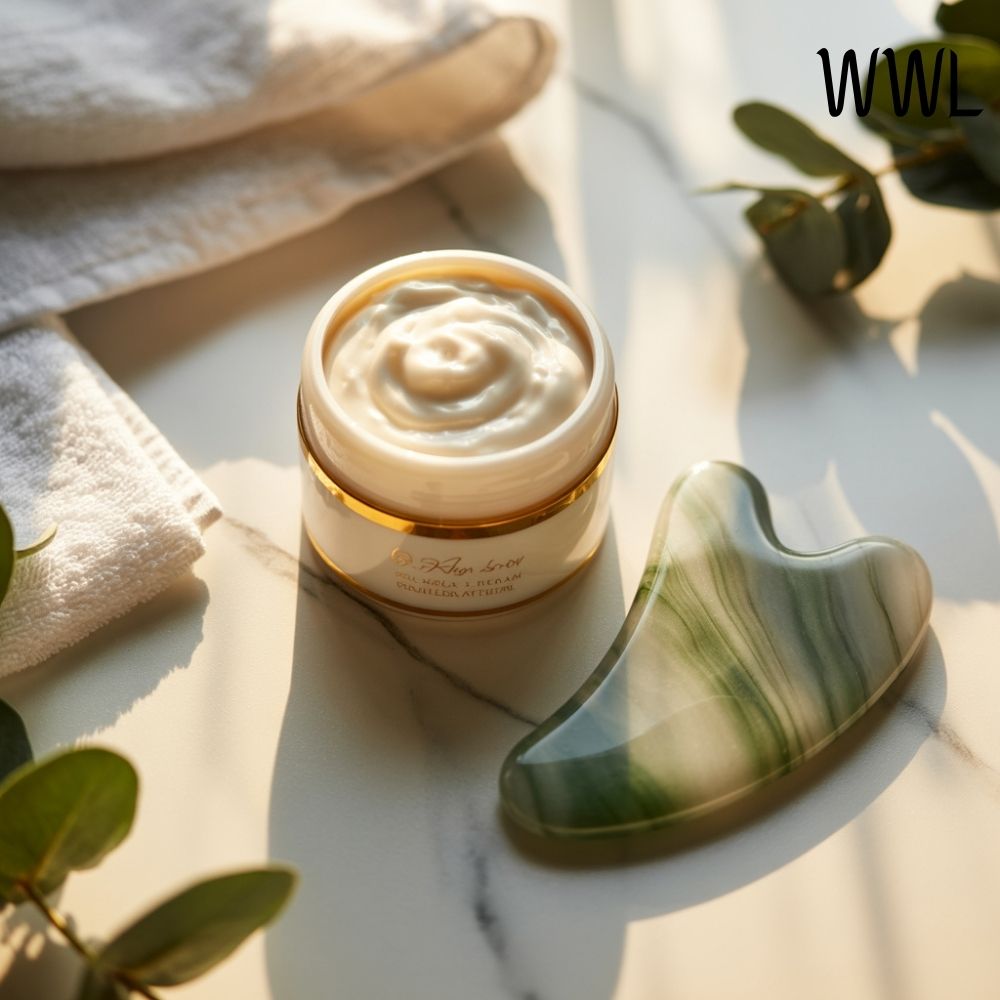
The first item I reach for consistently is a rich body cream with a comforting texture and a familiar scent. I no longer rotate this step or treat it as optional, because it has become a physical signal to my body that the day has ended.
What matters here is not luxury, but weight. A cream that requires slow application encourages slower movement, deeper breathing, and a natural pause. I apply it to my arms, shoulders, and legs without rushing, and that repetition alone helps my nervous system release the need to stay alert.
Over time, this step has become less about skincare and more about transition.
The Simple Tool That Grounds Me Physically
After a long day, my body often holds tension in subtle places, especially my neck, calves, and feet. Rather than reaching for complex tools, I rely on one simple object that has earned its place through consistency.
A smooth stone massage tool, kept nearby, allows me to apply gentle pressure without distraction. I use it slowly, focusing on areas that feel tight, not with the intention of fixing anything, but simply acknowledging the physical presence of my body.
This small act of attention has proven far more effective than anything designed to deliver instant results. Grounding, I’ve learned, comes from contact, not correction.
The DIY Item I Use When My Mind Feels Full
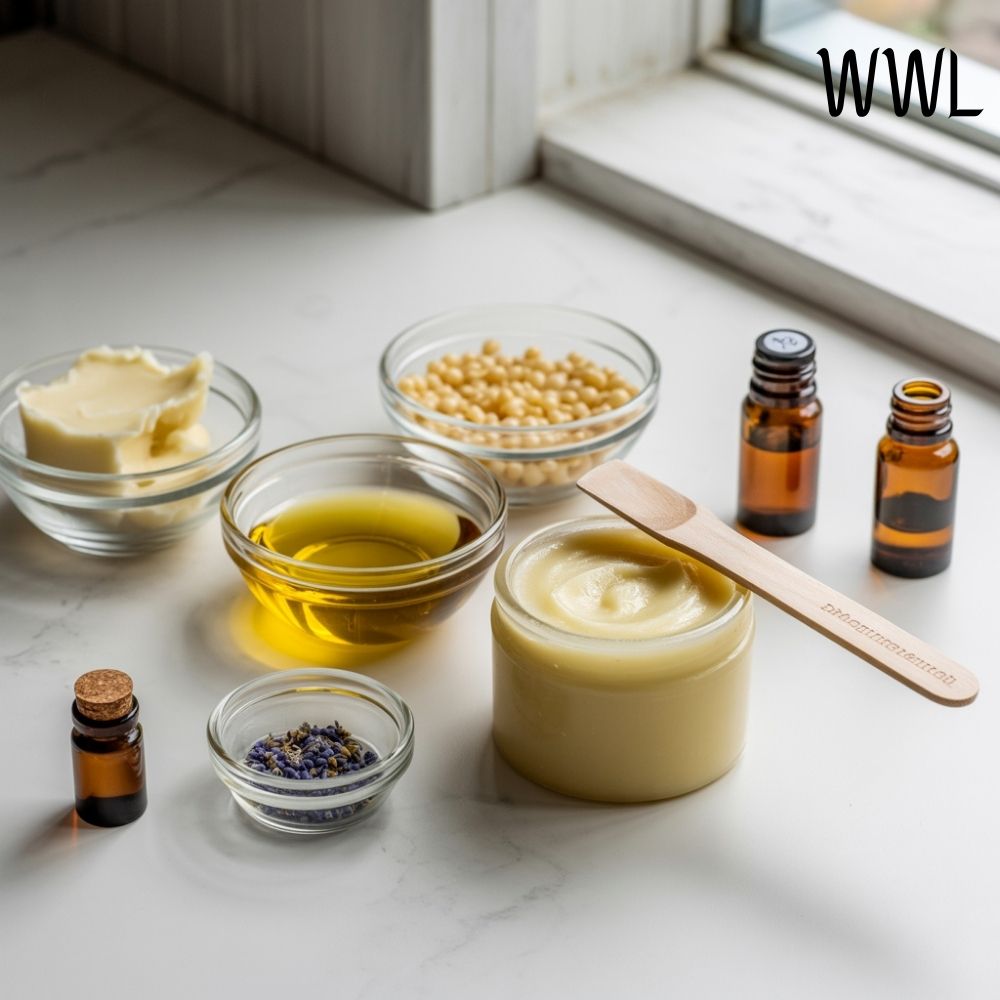
One of the most reliable elements of my evening routine is something I make myself, because it feels more personal and less transactional than purchased products. When my mind feels crowded and my body needs reassurance, this DIY item becomes my anchor.
DIY Calming Body Balm Recipe
Ingredients
- ¼ cup shea butter
- 2 tablespoons olive oil or almond oil
- 1 tablespoon beeswax pellets
- 8 drops lavender essential oil
- 4 drops chamomile or cedarwood essential oil
How I Make and Use It
I melt the shea butter, oil, and beeswax gently using a double boiler, allowing everything to combine slowly without overheating.
Once melted, I remove the mixture from heat and let it cool slightly before stirring in the essential oils. I pour it into a small glass jar and let it set until it reaches a soft, balm-like consistency.
In the evening, I warm a small amount between my palms and apply it to my hands, wrists, and the back of my neck. The scent is subtle, the texture grounding, and the process itself forces me to slow down.
Because I made it myself, the balm feels familiar rather than stimulating, which makes it especially effective when I am mentally tired.
The Sensory Element That Softens the Space
After a long day, I am sensitive to stimulation. Bright light and sharp contrasts feel intrusive, which is why I rely on one consistent sensory adjustment rather than multiple decorative elements.
A single warm lamp replaces overhead lighting, and the change is immediate. The room feels quieter without becoming dim, and my body responds almost instinctively. This adjustment requires no preparation and no decision-making, which is precisely why it works.
Sometimes the most effective self-care item is not something you apply, but something you remove.
How This Changed My Relationship With Self-Care
Letting my routine be shaped by what I actually reach for rather than what I aspire to use changed everything. My evenings became simpler, calmer, and more restorative, not because I did more, but because I trusted myself more.
There is a quiet confidence in knowing that your routine works on your most ordinary days. That confidence carries into the rest of life in ways that are difficult to measure but easy to feel.
Final Thoughts
The self-care items I actually reach for after a long day are not the most beautiful or the most talked about. They are the ones that feel like support rather than suggestion. They meet me where I am, without expectation, and that is why they stay.
In my experience, true self-care reveals itself not in moments of inspiration, but in moments of fatigue. What you choose then tells you everything you need to know about what truly supports you.