
I believed calm would arrive with the next product, the next ritual, or the next thoughtful purchase. Each addition seemed like it might be the missing piece that would finally make my evenings feel quieter and more intentional.
I wasn’t overbuying, but I was always searching, and that constant search became its own form of fatigue. My bathroom drawer grew fuller while my sense of rest stayed uneven, and I began to notice the contradiction of trying to create calm through accumulation.
One evening, standing in my bathroom surrounded by things I already owned, I felt strangely disconnected from the space. Nothing was wrong, yet nothing felt settled or supportive either.
That was the moment I realized the problem wasn’t a lack of tools, but a lack of cohesion. I had plenty of products and routines, but they weren’t working together in a way that actually served me.
So instead of adding something new, I chose to pause and reorganize what was already there. What took shape was a DIY self-care routine built entirely from what I already had at home, and it became one of the most grounding changes I’ve made in years.
The Foundation of My DIY Self-Care Routine
Before creating anything new, I spent several evenings simply noticing my habits. I paid attention to the moments when my body naturally wanted to slow down and the moments when my mind resisted rest.
This observation became the most important step, because it ensured that the routine would support my actual rhythm rather than an idealized one.
What I discovered was that I needed three things consistently: physical grounding, sensory calm, and a clear emotional transition between the day and the evening. Everything else was optional. With that clarity, I began shaping a routine using only what was already in my home.
Step One: The Physical Reset Using a DIY Warm Towel Ritual
The first element of my routine focuses on the body, because physical tension often lingers even when the day is technically over. I realized that I didn’t need elaborate tools for this, just warmth and intention.
DIY Warm Towel Recipe
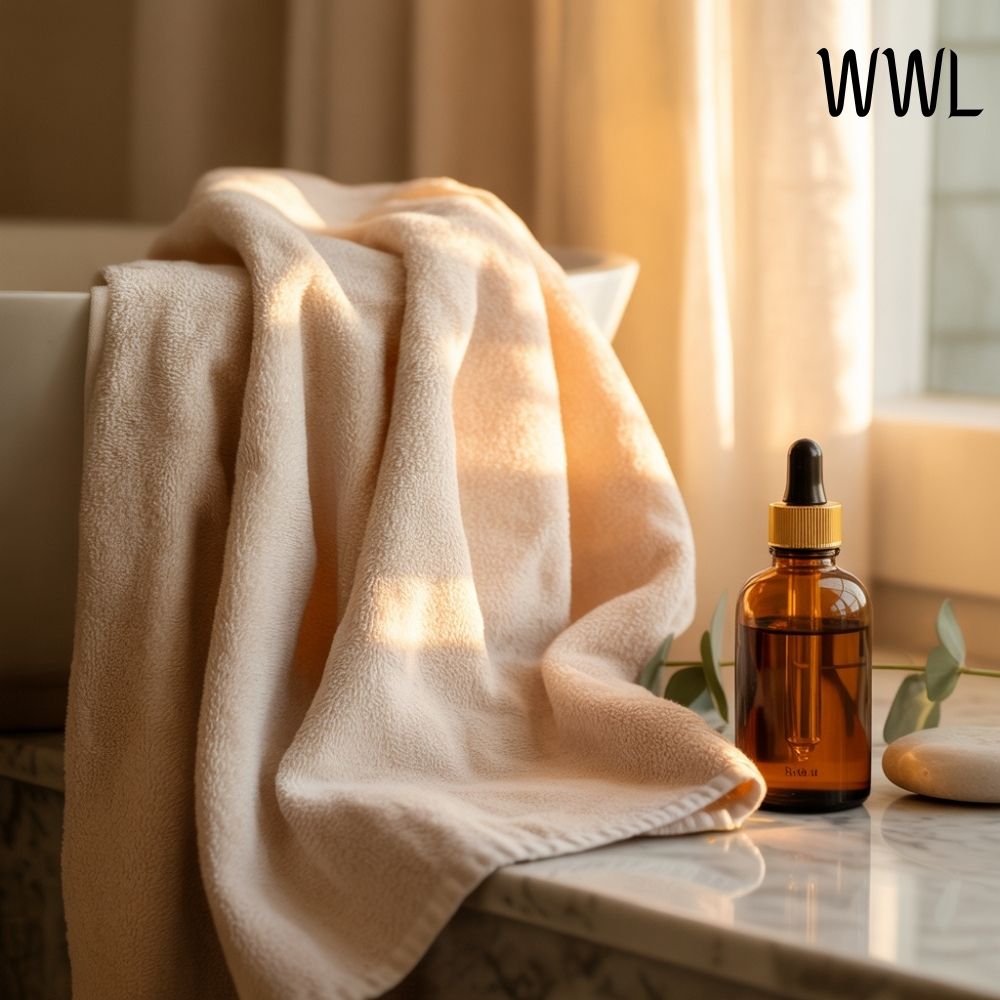
I take a clean hand towel and run it under warm water, then wring it out gently until it is damp rather than wet. If I want to elevate the experience slightly, I add one or two drops of essential oil that I already own, usually lavender or eucalyptus, directly onto the towel.
I place the towel across the back of my neck or over my shoulders and sit quietly for two to three minutes, breathing slowly while allowing the warmth to release tension. This simple act signals to my nervous system that the day has shifted, and it works far more reliably than scrolling or distraction ever did.
Step Two: A DIY Body Oil Using Pantry and Bathroom Staples
Instead of reaching for multiple lotions or products, I simplified my body care into one conditioning step that feels grounding rather than indulgent.
DIY Body Oil Recipe
In a small bottle or bowl, I combine two tablespoons of a neutral oil I already own, such as olive oil, almond oil, or jojoba oil, with three to five drops of essential oil. I mix gently and apply it to damp skin after a shower, focusing on arms, legs, and hands.
The oil seals in moisture and creates a subtle sensory boundary between the day and the evening. Because the ingredients are familiar, the ritual feels comforting rather than stimulating, which is exactly what I want at that time of night.
Step Three: A DIY Foot Soak That Grounds the Nervous System
One of the most effective parts of my routine came from realizing how rarely I gave my feet any attention, despite how much they carry me through the day.
DIY Foot Soak Recipe
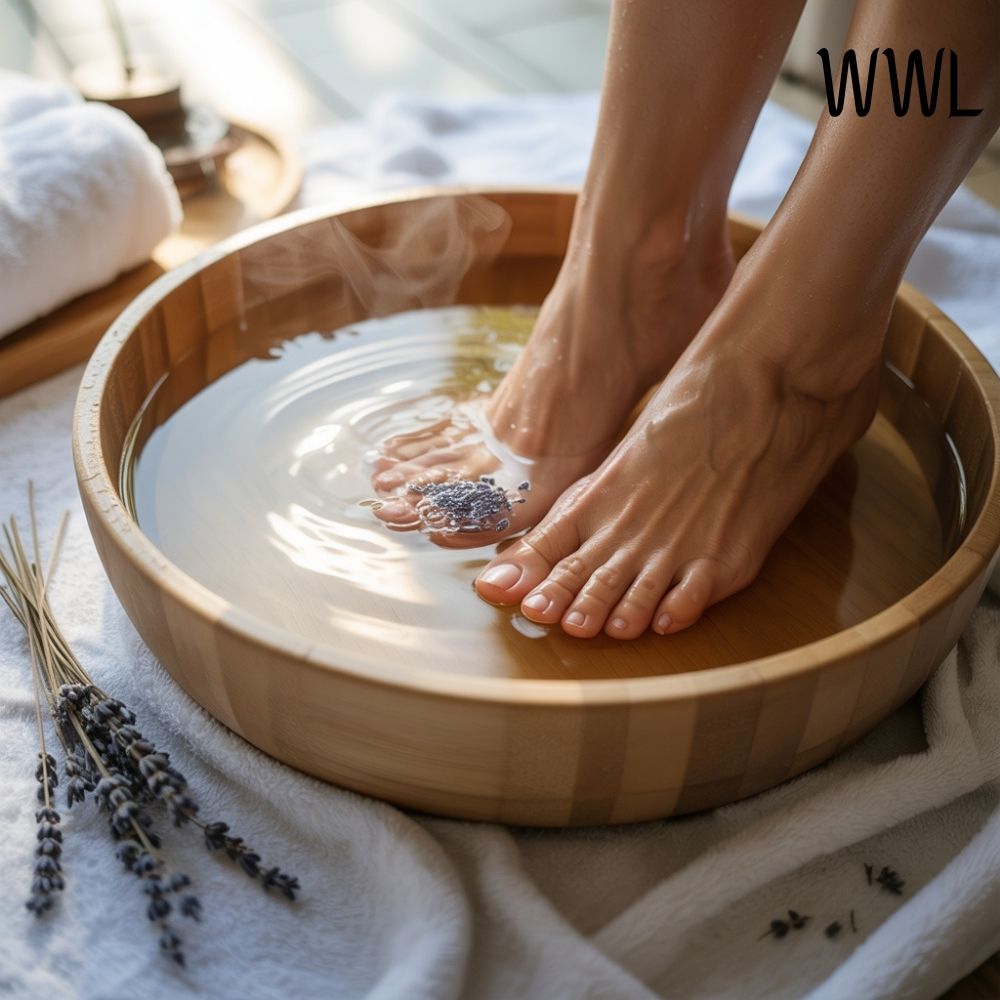
I fill a basin with warm water and add half a cup of Epsom salt, which I already keep at home, along with a few drops of essential oil if I feel like it. I soak my feet for ten minutes while seated comfortably, often with dim lighting and no distractions.
This step grounds me physically and emotionally, and I’ve noticed that on evenings when I include it, I fall asleep more easily and wake feeling steadier.
Step Four: Creating Sensory Calm With What I Already Own
Rather than buying candles or sprays specifically for self-care, I curated sensory cues from items already present in my home. A lamp with warm light replaced overhead lighting.
A soft throw became part of the ritual rather than decor. Even the same mug I use every morning became my evening tea vessel, creating a sense of continuity rather than separation.
This consistency helped my body recognize the routine without conscious effort. Self-care became something I slipped into rather than something I prepared for.
Why This DIY Routine Works So Well
This routine works because it is cohesive, repetitive, and grounded in familiarity. It does not rely on motivation or novelty, and it does not ask me to become someone else in order to benefit from it. Every element already exists in my home, which removes friction and decision fatigue entirely.
I also noticed that because the routine feels personal rather than prescribed, I return to it naturally. There is no pressure to perform self-care correctly, only an invitation to slow down consistently.
Final Thoughts
The DIY self-care routine I built using only what I already had at home taught me that rest does not require constant upgrading. It requires coherence, intention, and respect for your own rhythms.
When self-care is designed around your real life rather than an idealized version of it, it becomes sustainable, supportive, and quietly powerful.
In my experience, the most effective rituals are not the most impressive ones. They are the ones you return to without thinking, night after night, because they feel like home.