
There was a time when my beauty routine felt like it was always in motion. New tools entered my life regularly, each one promising better skin or faster results. I enjoy understanding aesthetics, textures, and systems, and beauty tools felt like an extension of that curiosity.
Yet over time, something shifted. My drawers became fuller, but my routine did not feel more effective. In fact, it began to feel slightly fragmented, as if I were constantly adjusting instead of settling.
The moment that clarified everything came one evening while I was putting products away after a long day. I noticed that despite owning several tools designed for the same purpose, I reached for the same few instinctively.
They were the ones that felt intuitive in my hands, the ones that fit naturally into my rhythm, and the ones I never questioned when I was tired. The rest, no matter how impressive they once seemed, had quietly lost relevance.
Instead of asking whether something worked in theory, I began asking whether it earned its place through consistency, ease, and alignment with my real life.
What follows are the few beauty tools that did exactly that, not because they are trendy or dramatic, but because they integrate seamlessly into my routine and support it quietly over time.
The Facial Tool I Reach for Without Thinking
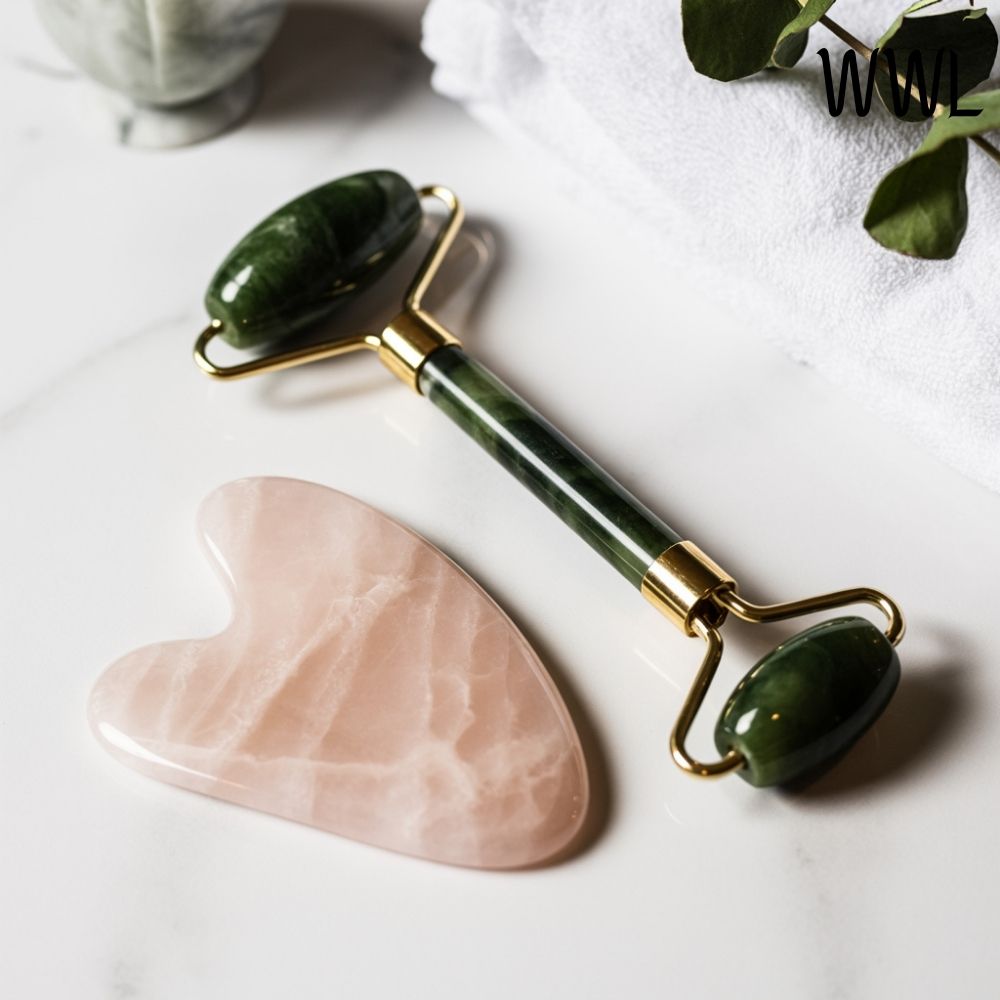
The first tool that earned permanence was a simple facial massage tool with clean lines and enough weight to feel grounded in the hand. I had tried several variations over the years, some elaborate, others aggressively marketed, but this one stayed because it never demanded effort.
What I value most is its restraint. It does not vibrate, heat, or flash. It simply encourages slow, intentional movement across the face and neck, which is exactly what my skin and nervous system respond to at the end of the day.
I use it most evenings, not because I feel obligated, but because it feels like a natural extension of applying moisturizer.
Over time, I noticed that the benefits were cumulative rather than immediate. My face looked more relaxed, not lifted in an obvious way, but softer and more rested, which aligns far more closely with how I want to look and feel.
The Body Tool That Changed How I Apply Care
For body care, the tool that stayed surprised me. It was not something I purchased with high expectations, but it became indispensable because it changed the way I interacted with my own body.
A dry brush with moderate firmness earned its place not because it promised transformation, but because it created awareness. Using it a few times a week before showering helped me slow down and reconnect physically in a way lotions alone never did.
The ritual is brief, but it shifts my attention inward, reminding me that body care is not something to rush through. I noticed improved circulation, but more importantly, I noticed that I became more present.
Tools that invite presence tend to last. Tools that demand results rarely do.
The Hair Tool That Simplified My Routine
In the category of hair tools, only one earned a permanent place, and it did so because it reduced complexity rather than adding to it. A well-balanced brush with natural bristles replaced several styling tools I once relied on, because it worked with my hair instead of against it.
I noticed that when a tool respects the natural texture of your hair, you spend less time correcting and more time maintaining. This brush became part of my daily routine because it required no learning curve and no special conditions. It worked whether I was preparing for the day or winding down at night.
Simplicity, in this case, was not a compromise. It was an upgrade.

Why These Tools Stayed When Others Didn’t
Looking at the tools that earned permanence, a pattern becomes clear. None of them require precision, tracking, or performance. They support my routine rather than dominate it. They work quietly, consistently, and without demanding attention.
They also integrate emotionally. When I am tired, I still use them. When life feels full, they do not feel like obligations. That is the standard I now use when deciding whether something deserves a place in my routine.
If a tool does not make care easier, it does not stay.
Final Thoughts
The beauty tools that earned a permanent place in my routine did so not through novelty or intensity, but through consistency and ease. They support my rituals without demanding attention, and they respect my energy rather than competing with it.
In my experience, refinement in beauty does not come from accumulation. It comes from knowing what to keep and having the confidence to let the rest go.
When tools work quietly in the background, the routine becomes less about effort and more about care, and that is where real sustainability lives.