
I used to treat surface cleaning as a task that simply had to be repeated, no matter how often I did it or how carefully I wiped everything down. I assumed that keeping a home looking composed meant circling back to the same surfaces again and again.
That belief finally unraveled one afternoon when I noticed how quickly fingerprints returned to a console table I had just cleaned. The light was gentle, the room felt balanced, and yet the surface already looked unsettled again.
Standing there, cloth still in hand, I realized the issue was not effort or timing. It was that my surfaces were unprotected and constantly exposed, which meant I was cleaning symptoms instead of addressing the cause.
That moment changed how I thought about cleaning entirely. Instead of asking how to clean better, I began asking how to design surfaces that resisted dirt in the first place.
The DIY cleaning hack I use now is simple, intentional, and quietly transformative, and it keeps my surfaces looking clean without requiring constant attention.
The Shift That Changed Everything
Instead of relying solely on wiping surfaces reactively, I started treating them the way I treat design elements, which meant assigning boundaries and reinforcing them with intention.
I paired this mindset with a simple DIY cleaning solution that lightly conditions surfaces after cleaning, helping them stay cleaner longer while maintaining a soft, refined finish.
This combination, surface zoning paired with a protective wipe-down, became the system that finally worked, and once it was in place, the difference was immediate.
The DIY Cleaning Recipe I Use on Every Key Surface
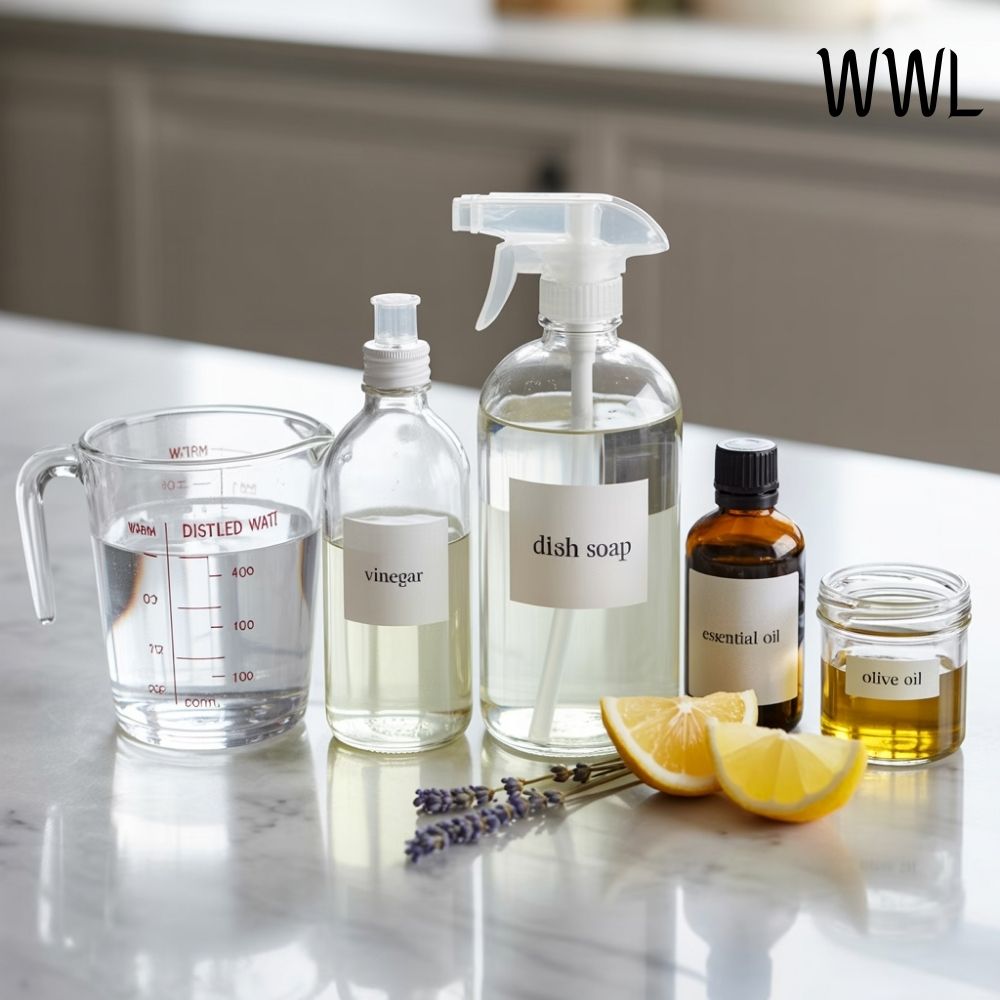
Ingredients
- 1 cup warm distilled water
- 1 tablespoon white vinegar
- 1 teaspoon mild dish soap
- 5 to 7 drops essential oil, such as lemon, lavender, or eucalyptus
- 1 teaspoon olive oil or fractionated coconut oil
How I Make and Use It
I begin by pouring the warm water into a clean spray bottle, followed by the vinegar and dish soap, allowing the ingredients to combine gently without shaking too aggressively.
I then add the essential oil for a subtle scent and finish with the oil, which is the key element that changes how the surface behaves over time.
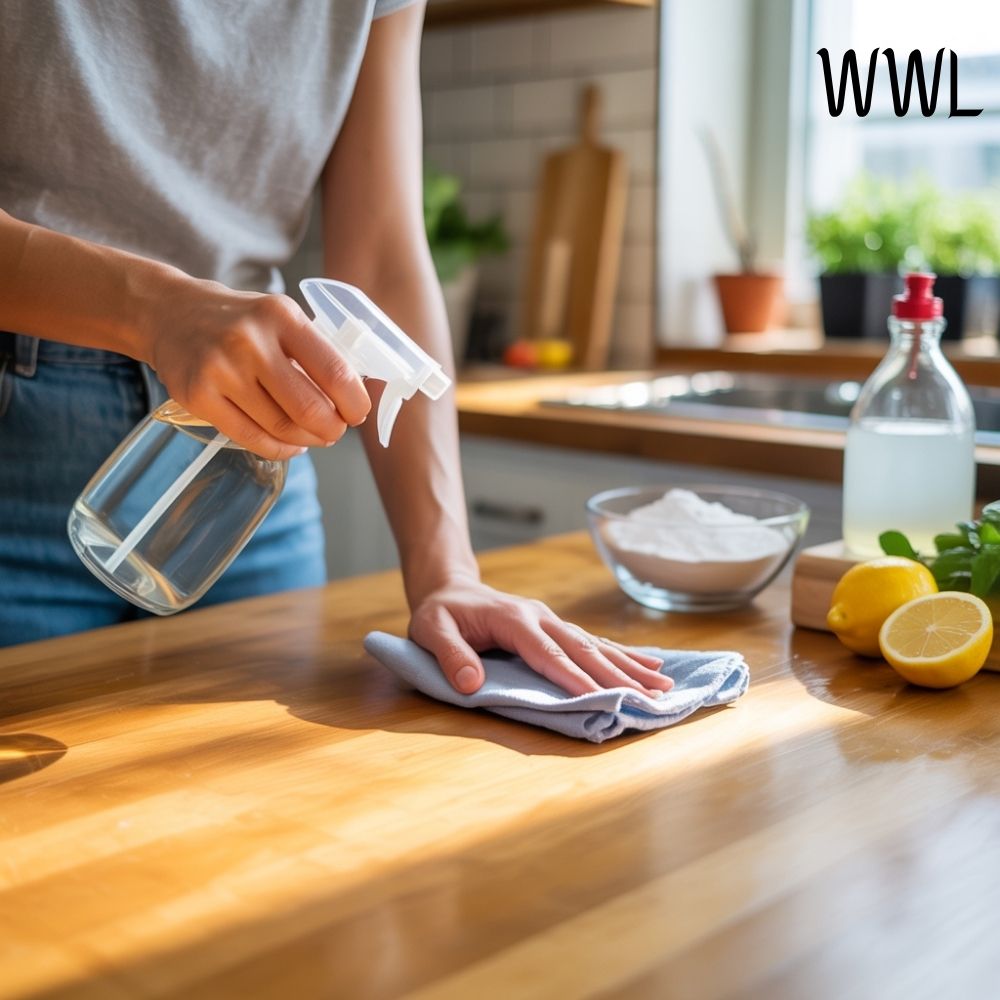
Once the mixture is ready, I lightly mist a microfiber cloth rather than spraying the surface directly, which gives me more control and prevents residue buildup. I wipe the surface slowly and evenly, paying particular attention to the areas that receive the most contact.
The oil leaves behind an almost invisible conditioning layer that helps repel dust and fingerprints, while the vinegar and soap clean thoroughly without stripping the surface. The result is a finish that feels clean but not dry, polished but not shiny.
Why This Recipe Works So Well
What makes this DIY solution effective is balance. The cleaning elements remove residue without harshness, while the oil creates a subtle barrier that reduces how easily new residue settles. Surfaces remain visually calm longer because they are no longer raw and exposed after cleaning.
I noticed almost immediately that dust accumulated more slowly and fingerprints wiped away more easily, often with just a dry cloth. Over time, this reduced how often I needed to clean altogether, which was the outcome I had been looking for all along.
How I Pair the Recipe With Surface Zoning
To make this system truly effortless, I combine the cleaning recipe with intentional surface zoning. I place a single tray, mat, or shallow vessel in the area where contact naturally happens, which concentrates use and protects the surrounding surface.
After cleaning and conditioning the entire surface, I return only what belongs there, allowing the protected zone to absorb daily interaction while the rest remains untouched. This pairing reduces visual clutter and dramatically extends the time between cleanings.
Final Thoughts
The DIY cleaning hack that changed my home was not about stronger products or stricter habits. It was about understanding how surfaces function and supporting them with intention.
By combining a simple conditioning recipe with thoughtful surface design, I created a system that keeps my home feeling calm, polished, and quietly maintained.
When your environment works with you rather than against you, cleanliness becomes less about effort and more about design. And in my experience, the most refined homes are always the ones that feel easiest to live in.