
A few months ago, during an early afternoon when sunlight fell softly across my dining table, I realized how much I craved a simple centerpiece that felt modern without demanding attention.
My home has always leaned toward the clean and intentional, but I often found myself removing decorations that felt too busy, too seasonal, or simply too loud. I wanted something quieter. Something that blended into the rhythm of the room while still elevating it.
That day, instead of searching online or visiting a store, I decided to look around my home with a more refined eye. Three uncomplicated elements came together in minutes and created a centerpiece that felt like a breath of calm air.
This minimalist centerpiece has become a reminder that beauty doesn’t have to be elaborate, and elegance doesn’t require excess. It’s effortless, cohesive, and deeply aligned with the modern, curated aesthetic I love.
Today, I want to share not just how I make it, but how this five-minute practice shifted the way I approach styling as a whole.
How This 5-Minute Centerpiece Came to Life
The original version happened almost by accident. I remember clearing the dining table, leaving nothing on it for the first time in weeks. The empty surface felt peaceful but a little too stark, as if it needed a single intentional element to anchor the room.
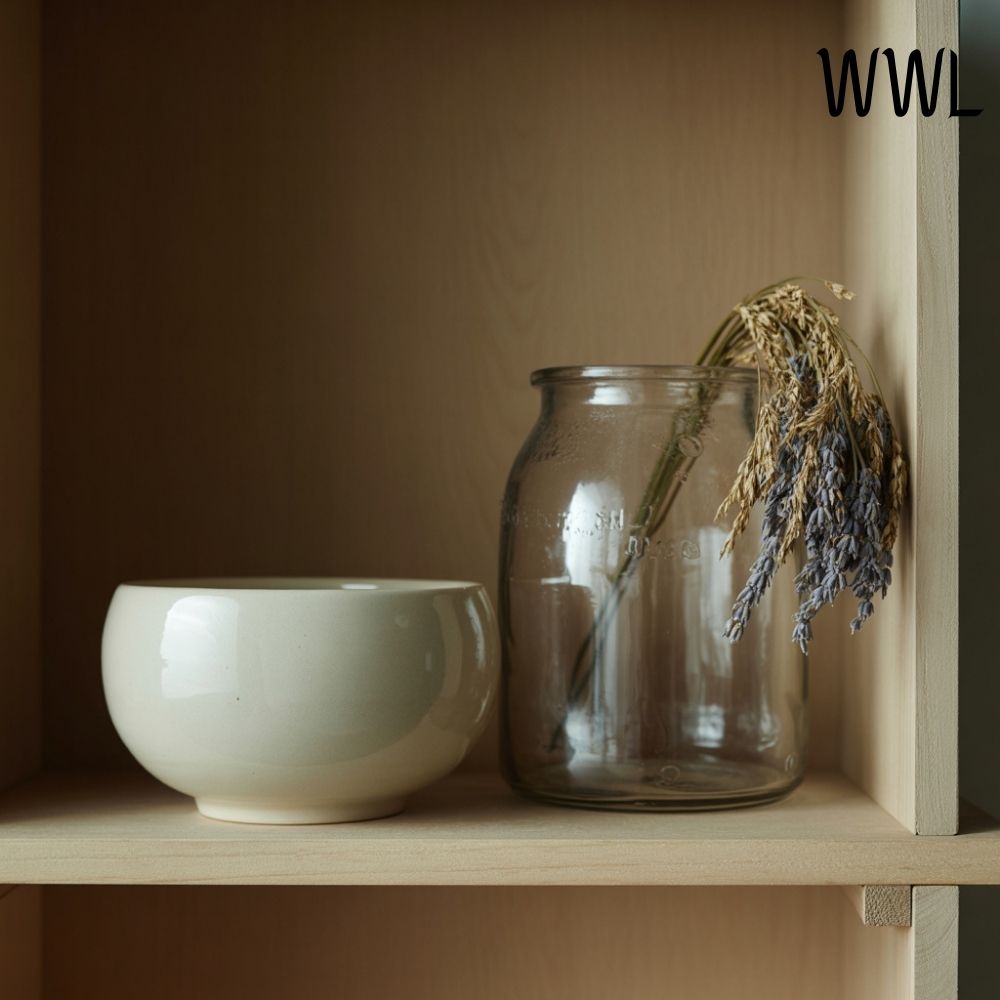
I walked around my home, taking in objects I usually overlooked: a smooth ceramic bowl on a shelf, a glass jar I had recently repurposed, a cluster of dried stems resting in a corner. Without meaning to, I began placing them together until a balanced composition formed in front of me.
It took less than five minutes, but the effect was instant. The entire dining area felt more polished, more thoughtful, more grounded.
The Three Elements I Always Use
Although the centerpiece changes slightly each season, the structure stays the same. It always consists of three components, each chosen for contrast and cohesion.
1. A Clean, Sculptural Vessel
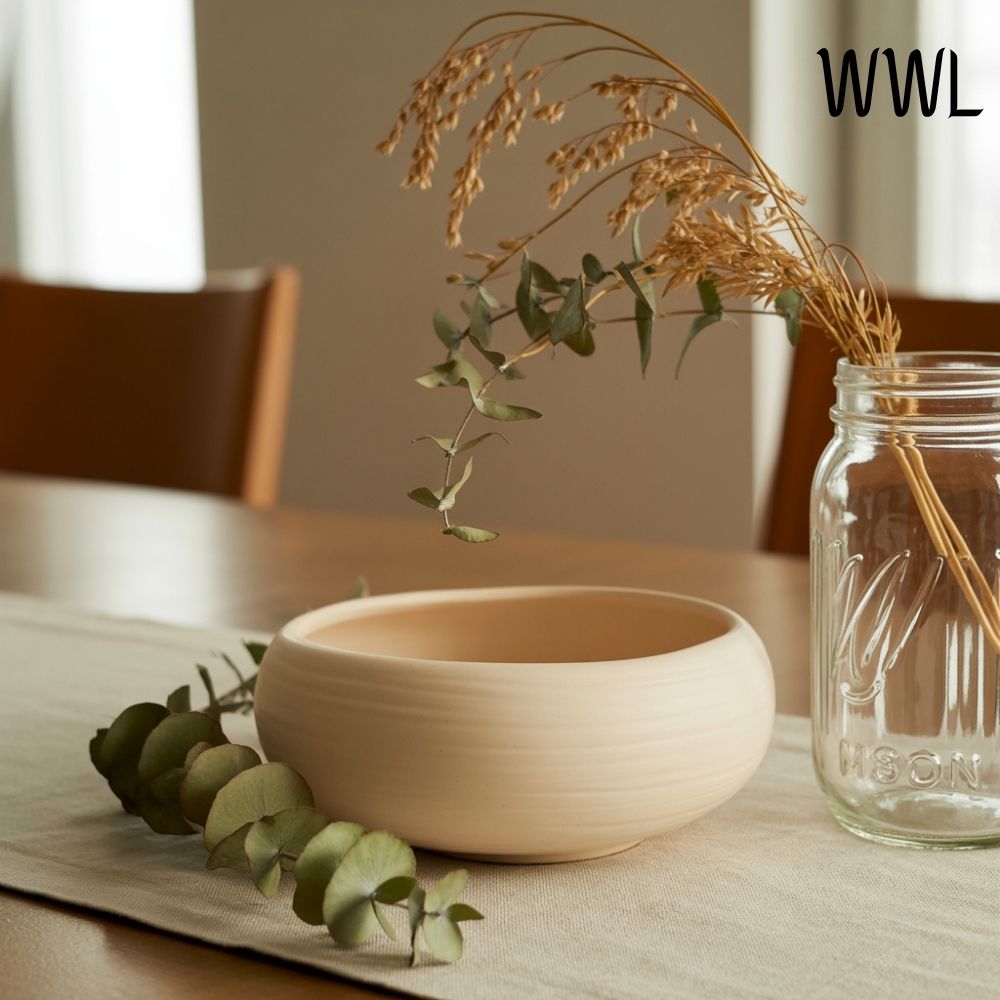
This is usually something with smooth lines and a matte finish. I tend to use a ceramic bowl or a stone tray because they create a grounding visual base. Clear glass works beautifully too when I want the look to feel even lighter.
2. A Natural Element With Height
This changes often depending on what I have available. Sometimes it’s a single dried stem with a sculptural curve. Other times it’s a branch clipped from a tree outside or a few tall grasses collected on a morning walk.
Height introduces elegance. It draws the eye upward and adds a soft movement to the stillness of the table.
3. A Textural Accent
This is where I bring subtle depth, a few smooth stones, a cluster of acorns, wooden beads, or even a single folded linen napkin in a neutral tone.
Texture keeps the arrangement from feeling flat. It adds warmth without disrupting the minimalist aesthetic.
Why This Centerpiece Works Every Time
I’ve recreated this arrangement in so many variations, and it always succeeds for a few simple reasons:
- It respects negative space.
The table doesn’t feel crowded. The centerpiece breathes. - It blends with every season.
A winter branch feels just as elegant as a spring stem. - It provides calm visual rhythm.
Three elements create harmony without noise. - It turns everyday objects into decor.
Most pieces are already in my home, which keeps it simple and sustainable. - It stays relevant no matter how my style evolves.
Minimalism adapts, it never competes.
This centerpiece doesn’t demand attention; it enhances the environment. It feels like a whisper in a room that often holds too many voices.
How I Arrange It in Under 5 Minutes
When I say this is a five-minute project, I truly mean it. Here’s what the process looks like in my own home:
Step 1: Select the Vessel
I choose the vessel based on the mood of the room. Matte ceramics for calm days, glass when I want something airy.
Step 2: Add the Natural Element
I always position the stem first. Its direction determines the composition. A curved branch brings softness; a tall straight one adds structure.
Step 3: Introduce the Textural Accent
I place the stones or linen next, positioning them so the arrangement feels grounded. I’m careful not to add more than needed. Minimalism depends on restraint.
Step 4: Step Back and Adjust
This is the moment when the centerpiece settles into the room’s rhythm. A slight shift of angle or spacing can make the whole piece feel more balanced.
That’s it. No complicated layering, no symmetrical rules, no hunting for perfect items. Just clarity, intention, and a smooth visual flow.
How You Can Personalize the Concept While Staying Minimal
Although I always use the three-element structure, the details are completely adaptable. Here are a few variations I’ve styled:
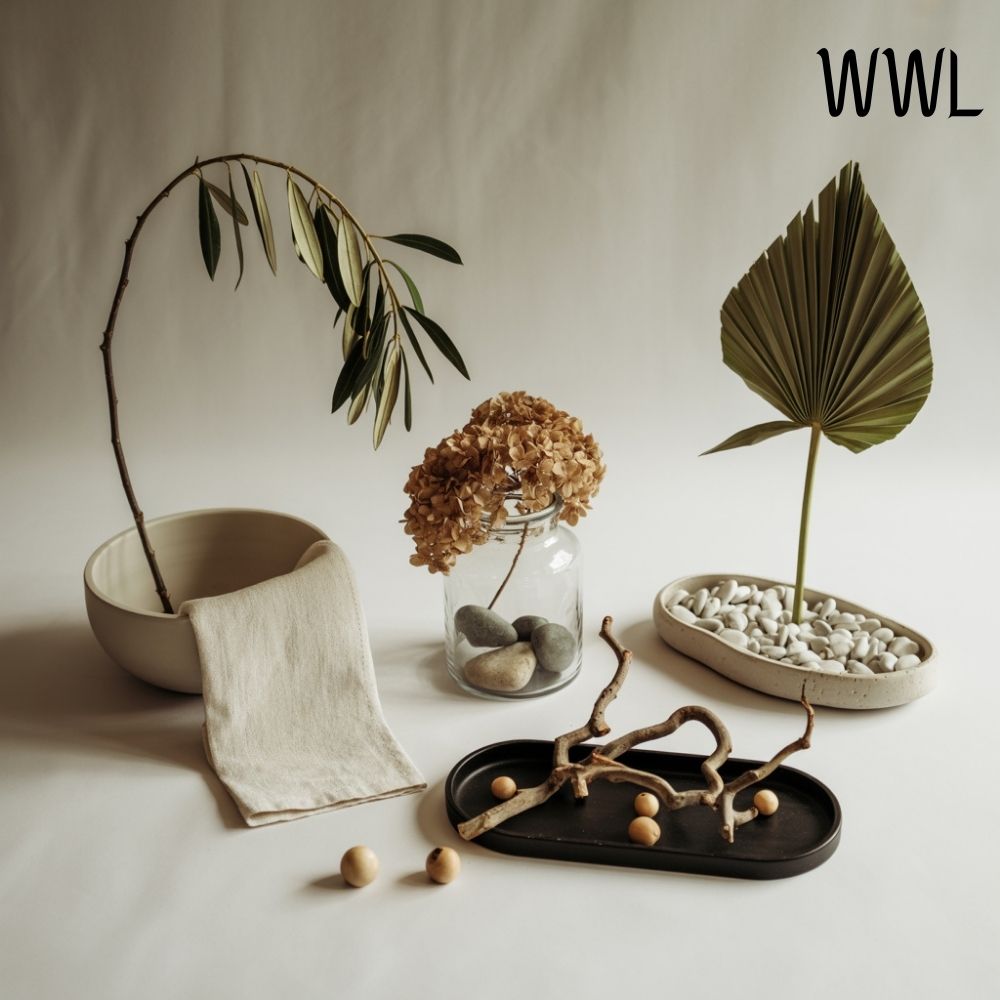
- A single tall olive branch + a linen napkin + a ceramic bowl
- A dried hydrangea bloom + smooth river stones + a glass jar
- A sculptural twig + a matte black tray + a cluster of wooden beads
- A palm leaf stem + white pebbles + an oval vessel
The key is to keep the choices intentional and restrained. Let each element breathe. Allow simplicity to speak.
Final Thoughts
This minimalist centerpiece has become a tiny act of beauty that fits seamlessly into my lifestyle. It’s proof that elegance doesn’t require complexity and that the simplest compositions often feel the most refined.
Creating something visually calming with just three elements reminds me that my home doesn’t need more objects; it needs more intention. And in a world that is already loud and full, minimalism offers a language of clarity that feels increasingly luxurious.